
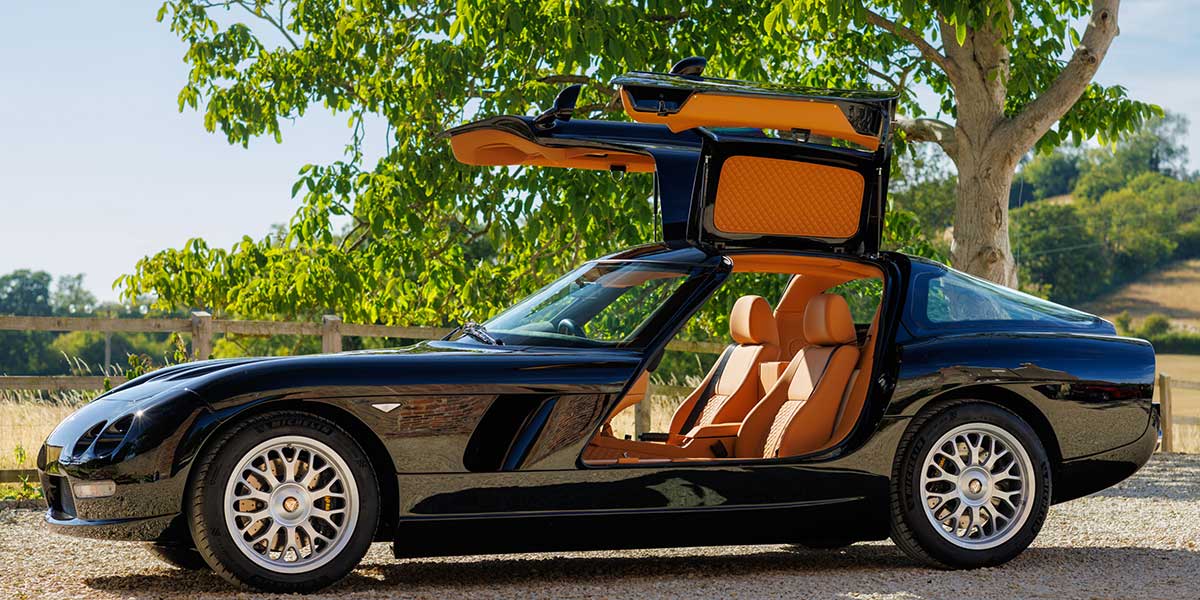
After 15 years, Bristol Cars—one of Great Britain’s most exclusive and enigmatic automotive brands—has returned to the spotlight.
Its rebirth does not start from scratch; rather, it brings to a conclusion one of the most significant unfinished chapters in the brand’s history: the Bristol Fighter.
Bristol’s previous production run ended in 2011, when the company entered insolvency proceedings. That same year, Kamkorp Autokraft acquired all of the company’s intellectual property and goodwill, subsequently licensing them to Bristol Cars. The company unveiled the Bristol Bullet in 2016, though that project never reached series production. Kamkorp Autokraft continued operations until 2022, and it is against this backdrop that the brand’s return begins—not by ignoring the gaps in its history, but by revisiting an authentic, unfinished chapter and completing what was left pending.
Rare, unconventional, and unmistakably Bristol, the impeccably preserved and meticulously restored prototype—seen here at the Salón Privé—has been brought back to life under the leadership of Paul King, owner and director of Bristol Cars, using original chassis and blueprints.
The first Fighter of this new era was presented in a striking black-over-beige color scheme, while four additional chassis remain available, awaiting assembly according to their future owners' specifications.
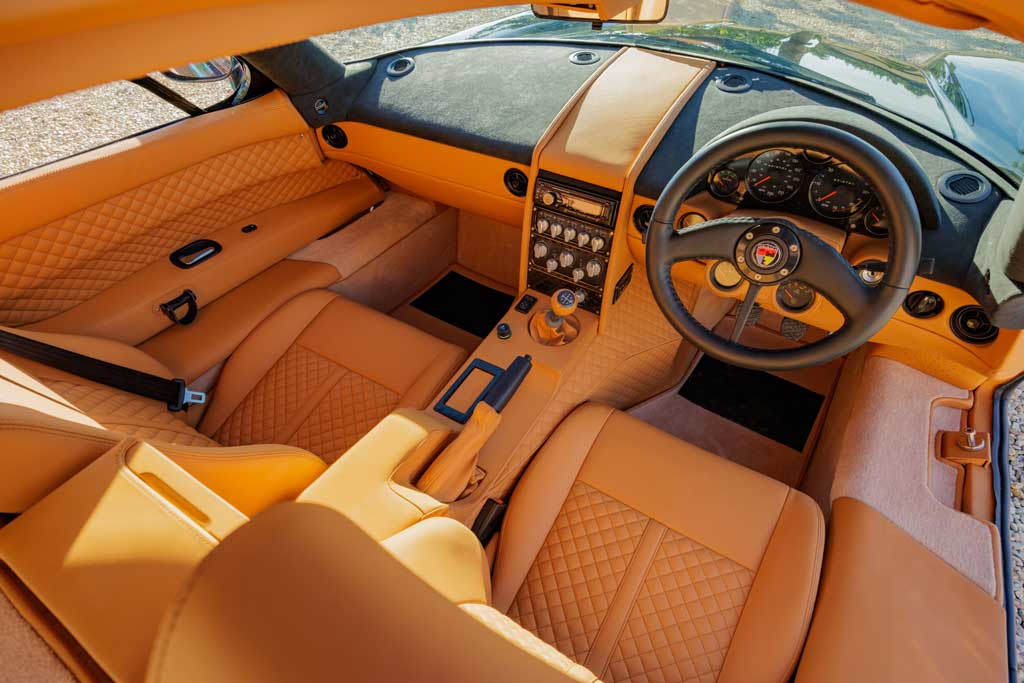 The Bristol Fighter is entirely handcrafted.
Originally conceived in the early 2000s, the Fighter was the final production model from Bristol before the company ceased manufacturing in 2011. This uncompromising, two-seater supercar features an aerodynamic body housing an 8.0-liter V10 engine, which delivers an impressive 525 hp in its standard configuration—or 600 hp in the upgraded version—with a claimed top speed of up to 338 km/h.
Long, low, and distinguished by its dramatic gull-wing doors, the design draws inspiration from both Bristol’s aeronautical roots and its performance ambitions; every element was crafted with an obsessive attention to detail and a clear, functional purpose that goes beyond mere aesthetics.
The confirmation that these final five Fighter chassis—and their corresponding production slots—still exist (with one already completed) represents far more than the revival of a single model. It brings to fruition a program that was left unfinished when production ceased, reconnects Bristol Cars with a tangible piece of its own history, and signals the beginning of the brand’s return.
The four remaining Fighters will be offered for sale in the coming months. Each has been hand-built upon an original, unused chassis. Unmistakably English and true to Bristol’s long-standing tradition of luxury, individuality, and exclusivity, these vehicles will rank among the most exclusive modern British sports cars on the market. They can be configured with either right-hand or left-hand drive and exported to major global markets, where their status as vehicles exempt from standard regulations—due to their rarity, collector value, and historical significance—is fully recognized.
The year 2026 will mark the 80th anniversary of the first Bristol automobile. Founded in 1945 as a subsidiary of the Bristol Aeroplane Company, Bristol completed the Bristol 400 in 1946. From its inception, the company forged its own path, leveraging its aeronautical heritage to create automobiles that combined advanced engineering with British luxury, performance, and individuality.
The brand became renowned for blending aviation-inspired engineering with British luxury, performance, and individuality, producing distinctive cars—as well as its own highly regarded engines—in limited quantities. Its engineering excellence was demonstrated in competition with the Bristol 450, which achieved a remarkable 1-2-3 finish in the two-liter class at the 24 Hours of Le Mans in 1954 and 1955.