
In haute horlogerie, true mastery is also measured in millimeters. Jaeger-LeCoultre takes this premise to the realm of fine jewelry with the new Calibre 101 Chain, a piece that transforms mechanical precision into a sculptural expression of contemporary elegance.
Its protagonist is the legendary Calibre 101, a rectangular, hand-wound mechanical movement that, since its introduction in 1929, represents one of the great milestones of horological miniaturization.
With dimensions of just 14 mm in length, 4.8 mm in width, and 3.4 mm in thickness, this mechanism retains its place as the smallest rectangular hand-wound movement in the world. Its current version integrates 98 components, the assembly of which requires approximately 40 hours of specialized work, a testament to the technical expertise that distinguishes the manufacture.
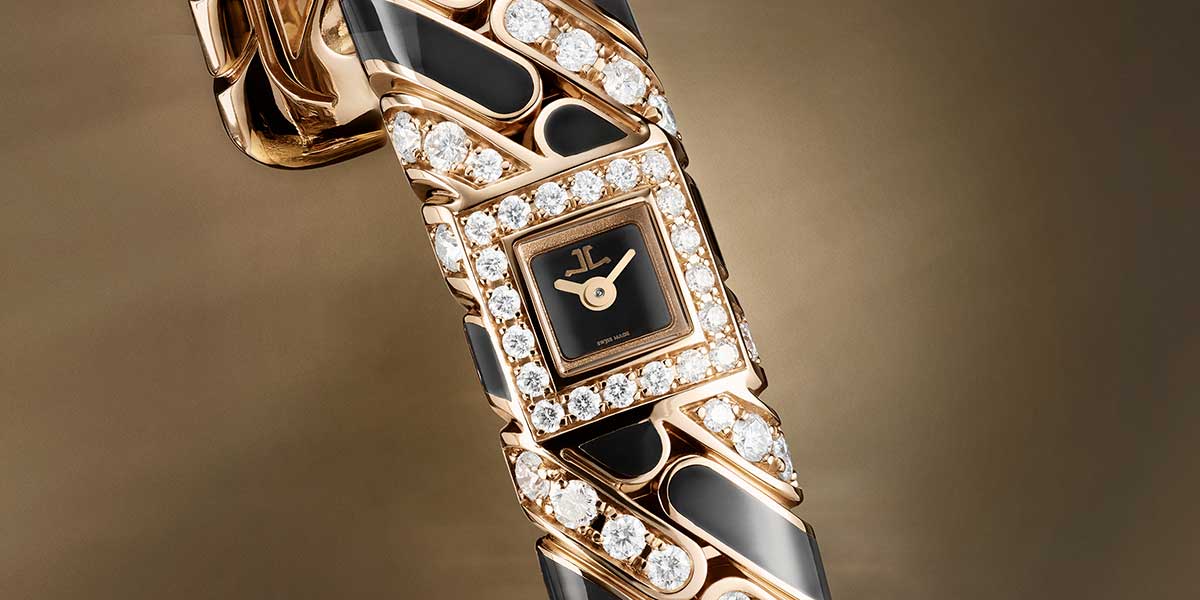
The new creation draws inspiration from a 1955 Duoplan model, known as the Chain, and projects it toward a bold aesthetic. The bracelet, crafted in 18-karat rose gold, alternates diagonal bands of brilliant-cut white diamonds with segments of HyCeram, a black ceramic composite with a rich finish.
True to a jewelry-centric vision, the design team first developed the bracelet's shape and the arrangement of the stones, later integrating the case and movement. The process involved more than 300 hours of research and technical development. This is complemented by the hand-setting of 158 diamonds, weighing approximately 2.73 carats.
The black lacquered dial, the set bezel, and the delicately proportioned case complete a timepiece that offers hour and minute indications and a 33-hour power reserve.
With the Calibre 101 Chain, Jaeger-LeCoultre demonstrates that innovation doesn't always require monumental dimensions. Sometimes, its ultimate expression lies in the ability to concentrate engineering, artisanal tradition, and creative freedom into a jewel conceived to carry time in an extraordinary way.