
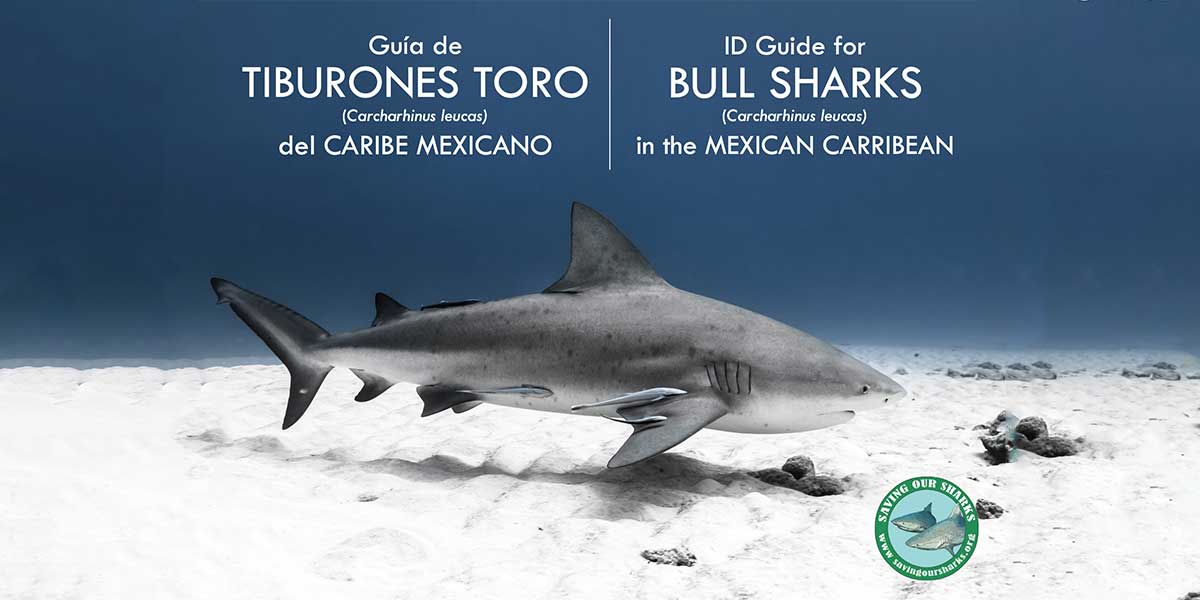
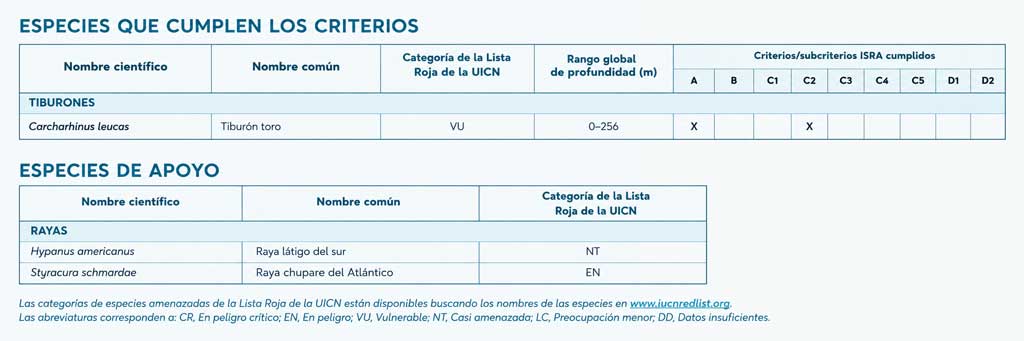
Playa del Carmen, in the heart of the Mexican Caribbean, is home to extraordinary biodiversity and ecosystems fundamental to the survival of numerous species. Among them is the bull shark (Carcharhinus leucas), which seasonally visits its waters, where females find important conditions during their gestation period.
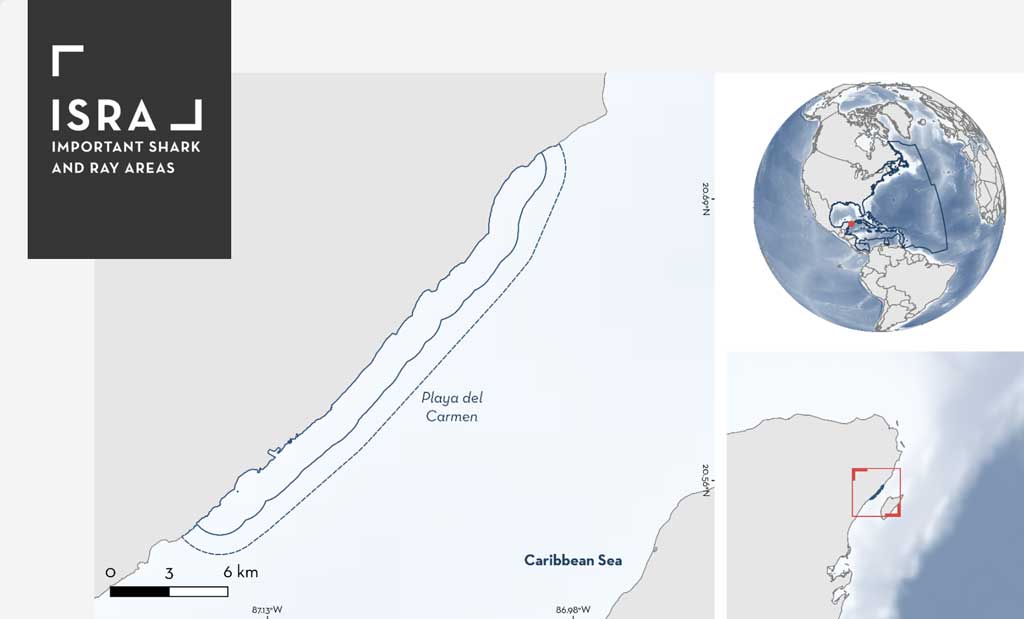
In recognition of its ecological importance, Playa del Carmen was identified as an Important Shark and Ray Area (ISRA), an international scientific initiative that seeks to identify and delimit areas essential for the survival of these species.
This recognition is the result of the compilation of scientific evidence and the collaboration between specialists, academic institutions, and organizations dedicated to marine conservation, including Saving Our Sharks and its partners.
The identification of this area provides a scientific tool to guide future conservation actions, strengthen decision-making, and promote responsible management of human activities in the marine environment. Read the Playa del Carmen ISRA (Important Shark and Ray Area) fact sheet
 An achievement of scientific collaboration for bull shark conservation.
This collective effort was strengthened by generating scientific information about bull sharks in Playa del Carmen, with the participation of researchers and partner organizations. Among Saving Our Sharks' contributions are their role in conducting the first ultrasound of wild bull sharks in the area and developing a bull shark identification catalog that allows for the recognition and tracking of individual specimens:
The research published in 2023 in the journal Frontiers in Marine Science documented the use of underwater ultrasound to identify embryos in free-swimming female bull sharks in Playa del Carmen. This work demonstrated the potential of using non-invasive technologies to study the reproduction of these animals in their natural environment and expand scientific knowledge about their biology.
Meanwhile, the photo-identification catalog contributes to the tracking of individuals and the understanding of their presence patterns in the region. Together with other research and field observations, this data helps build a more complete picture of the importance of Playa del Carmen for the species.
 Saving Our Sharks is a network of specialists driving conservation.
The identification of Playa del Carmen as an Important Shark and Ray Area is not the result of the work of a single organization. The official ISRA (Important Shark and Ray Area) profile recognizes the contributions of specialists and representatives from various institutions who participated in the collection, review, and consolidation of the scientific information.
Among the collaborators are Dr. Mauricio Hoyos, Director and co-founder of Pelagios Kakunjá and member of the Saving Our Sharks advisory board; and Nadia Sandoval Sandoval Laurrabaquio-Alvarado, from El Colegio de la Frontera Sur (College of the Southern Border). Oscar Sosa-Nishisaki and Luz E. Saldaña-Ruiz, from the Center for Scientific Research and Higher Education of Ensenada; and Peter Gausmann, from Ruhr University Bochum and the German Electrobranch Society (Deutsche Elasmobranchier Gesellschaft e.V.).
Also contributing from the Saving Our Sharks team were Fátima Alejandra Pamela Vázquez Márquez and Luis Lombardo Cifuentes; from the scientific community were Candy López Castillejos, Cecilia Gutiérrez-Navarro, Humberto Anduze, and Mizael Palomeque, from Baalche Proyecto Azul; and Emiliano García-Rodríguez, from the IUCN SSC Shark Specialist Group, within the framework of the ISRA project.
Likewise, we acknowledge the contributions of all participants in the ISRA 2026 Regional Workshop for Region 4, corresponding to the North American Atlantic and the Caribbean, whose work helped consolidate the information included in the official fact sheet.
Scientific Knowledge to Protect the Future
For Saving Our Sharks, this achievement represents the value of working together with researchers, academic institutions, partner organizations, and specialists committed to shark conservation. Each partnership contributes to a better understanding of bull sharks and to protecting the marine ecosystems of the Mexican Caribbean for future generations.