
Shortly after moving to Paris in 1904, Constantin Brancusi secured a position in Auguste Rodin's studio. However, he left after a month, arguing that “nothing grows under big trees.”
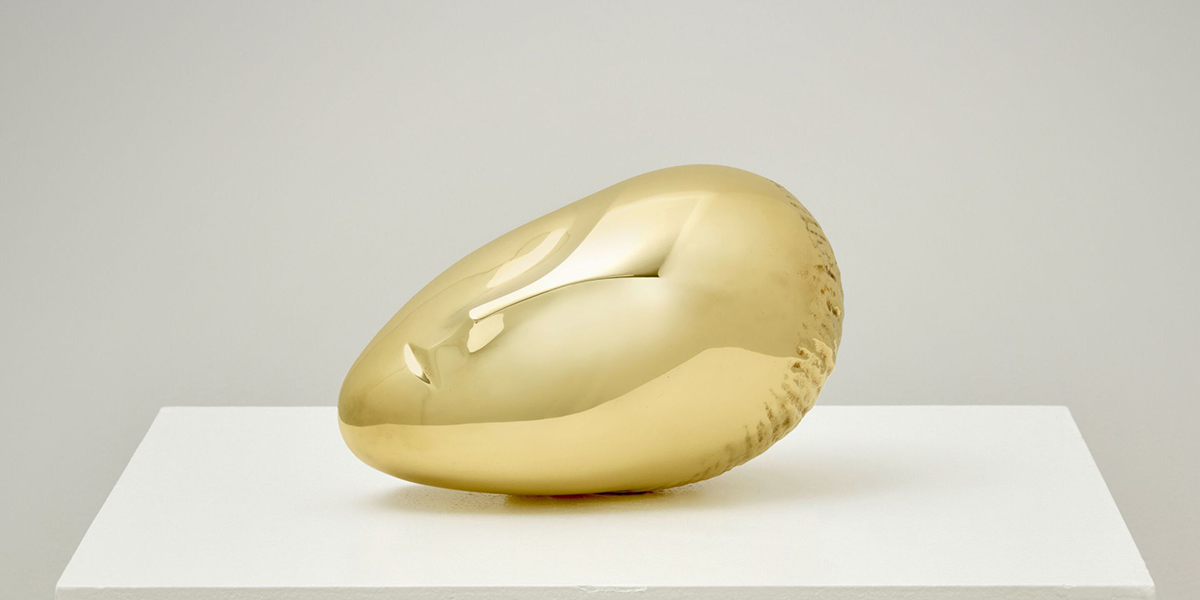
Brancusi would go on to become one of the most radical sculptors of the 20th century, and his career is being celebrated in a major exhibition at MoMA in New York, Brancusi: The Artist and His Studio. During the exhibition, five of his important bronzes are being offered at Bonhams, also in New York, in an exclusive sale of his collection, Brancusi: The Legacy, on November 18.
The Romanian-born artist is one of the few modern and contemporary masters to receive an institutional exhibition this fall, in addition to being represented by works in Bonhams' 20th and 21st Century Art auctions. Other featured artists include Roy Lichtenstein, the subject of the exhibition “Lichtenstein: Like New” at the Whitney Museum of American Art, and Willem de Kooning, the subject of “Willem de Kooning at Work” at the Rijksmuseum in Amsterdam. Works by all three artists are featured in the 20th and 21st Century Art auction at Bonhams' headquarters in New York.
These pioneering figures saw the world differently from others and, through their art, revealed different aspects of it. Brancusi took sculpture to the limits of abstraction, developing an organic vocabulary that evoked —rather than imitated— people, creatures, and objects. “Reality is not the appearance, but the essence of things,” he stated. Brancusi did not share Rodin's naturalism: his aesthetic was characterized by a serene simplification.
Among his best-known sculptures are those of sleeping heads. These are ovoid and disembodied, with individual facial features reduced to a minimum. The heads are positioned sideways, in a posture that invites sleep, as if the cheek were touching the pillow.
Roy Lichtenstein: Like New is the artist's first retrospective in New York since 1993. It explores how Lichtenstein revolutionized notions of what painting could be: beginning with his groundbreaking pop imagery of the early 1960s (derived primarily from comic books) and also showcasing later series of works inspired by art-historical sources such as Claude Monet, Pablo Picasso, and Chinese landscapes of the Song Dynasty.
The artist reconfigured, refined, and resized his original material, often cutting it up as well, with a distinctive style that mimicked the black outlines, flat, glossy colors, and Ben-Day dots of commercial printing. In Water Lilies with Cloud, Lichtenstein revisits one of Monet's most famous series and, in doing so, investigates his predecessor's experimentation with light and form.
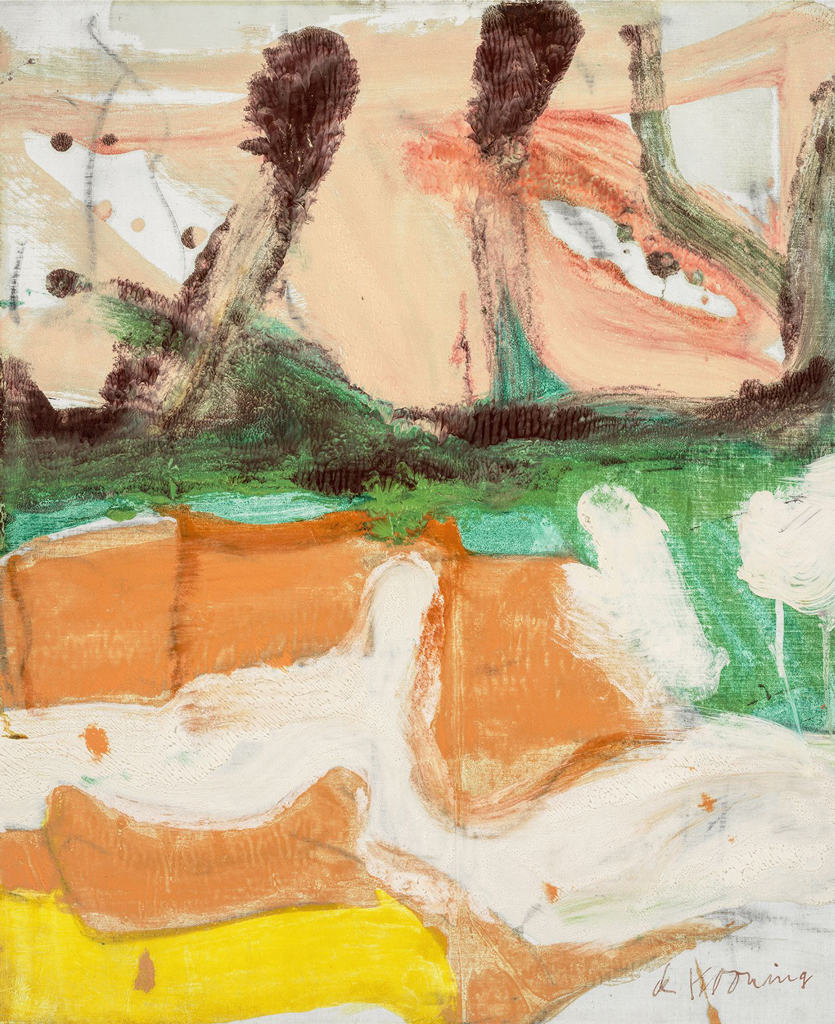 Willem de Kooning (1904-1997), Marshland Landscape, 1966.
Now in Amsterdam, after its initial presentation (under a different title) at the Art Institute of Chicago, Willem de Kooning in Action is the first major exhibition to focus on the artist's practice as a draftsman. Its thesis is that drawing remained fundamental to De Kooning throughout his career. The 200 works range from early still lifes drawn with academic rigor to later paintings executed in a calligraphic style.
De Kooning is perhaps best known for the way he dissolved the boundaries between figuration and abstraction, moving seamlessly from one mode to the other, often within the same work. The exhibition examines his dissolution of another set of boundaries: those between drawing and painting.
The 1966 painting Marshland Landscape features a vibrant palette of orange, white, and green that creates a powerful sense of movement, while De Kooning's contrasting forms in dark brown introduce contrasting textures and physicality. The work is part of a series painted in East Hampton, where De Kooning moved from New York in the early 1960s.